Can an Argument Map Preserve Real Disagreement? A 40-Claim Test
When forty claims contain objections, rebuttals, scope limits, and unresolved conflicts, what is lost by flattening them into linear summaries? Executed on frozen inputs with inspe
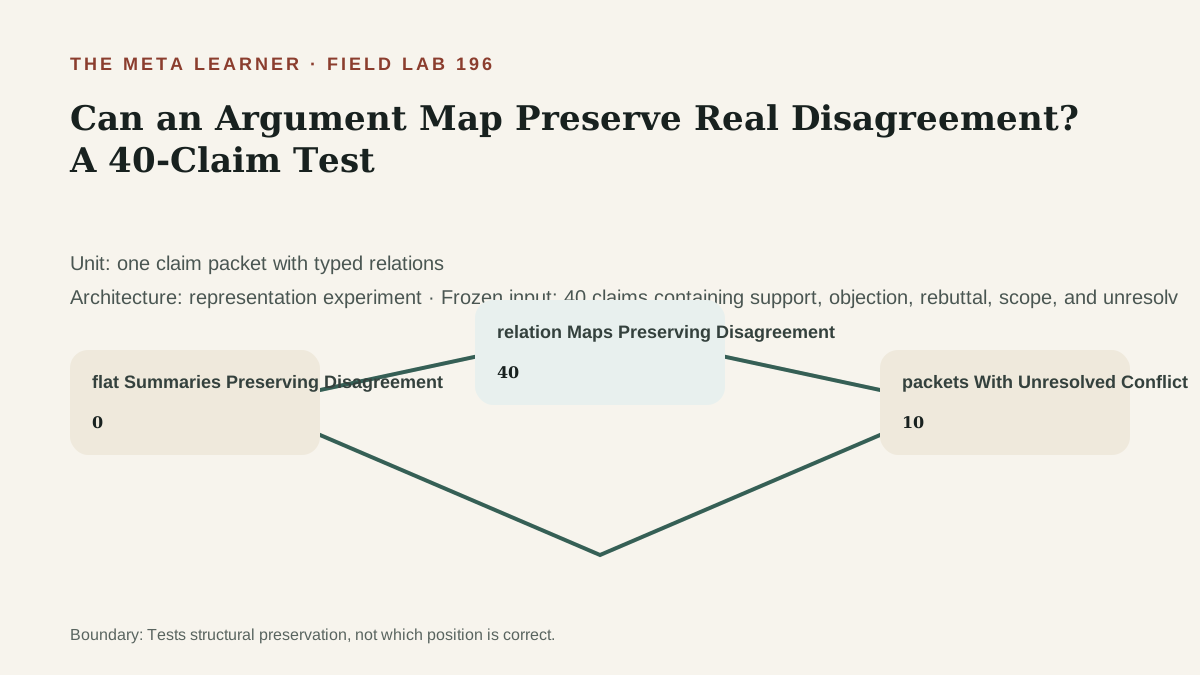
The executed transformation found that flat summaries preserved a supporting claim and scope but erased objection and rebuttal relations, whereas the relation map retained all forty disagreements without deciding them. Record support, objection, rebuttal, scope, and unresolved status as separate relations, then return to the source for interpretive judgment. The conclusion belongs to one claim packet with typed relations; visible readability alone cannot establish structural or intellectual fidelity.
Coherence can be manufactured by deletion
A flat summaries and relation-preserving argument maps representation can look intact while its consequential relations have already vanished. The predetermined research question is: When forty claims contain objections, rebuttals, scope limits, and unresolved conflicts, what is lost by flattening them into linear summaries? The object under examination is one claim packet with typed relations, not the quality of a person's thinking or the performance of an institution.
A claim-and-support summary can appear coherent by deleting the relation that shows why a serious objection remains unresolved. In this comparison, disagreement preservation treats visible preservation and structural preservation as different achievements. A flat summaries and relation-preserving argument maps file, map, or graph may remain readable while the relations needed for reuse are no longer recoverable.
Frozen disagreement preservation material comprises claim packets: 40; representations: 2. These flat summaries and relation-preserving argument maps records are small enough to inspect but varied enough to reveal losses that a successful opening or clean diagram would conceal.
Recover the relations beneath the disagreement preservation aggregate
The complete sanitized raw data is the canonical record for this run. These first twenty-eight disagreement preservation rows expose the relations behind the aggregate. The complete flat summaries and relation-preserving argument maps download retains the rest, including records that survive without incident.
- Row 1 — claim Id: M01; relations: support, objection, rebuttal, scope, unresolved; flat Summary Retains: support, scope; relation Map Retains: support, objection, rebuttal, scope, unresolved; flat Summary Preserves Disagreement: false; relation Map Preserves Disagreement: true.
- Row 2 — claim Id: M02; relations: support, objection, rebuttal, scope; flat Summary Retains: support, scope; relation Map Retains: support, objection, rebuttal, scope; flat Summary Preserves Disagreement: false; relation Map Preserves Disagreement: true.
- Row 3 — claim Id: M03; relations: support, objection, rebuttal, scope; flat Summary Retains: support, scope; relation Map Retains: support, objection, rebuttal, scope; flat Summary Preserves Disagreement: false; relation Map Preserves Disagreement: true.
- Row 4 — claim Id: M04; relations: support, objection, rebuttal, scope; flat Summary Retains: support, scope; relation Map Retains: support, objection, rebuttal, scope; flat Summary Preserves Disagreement: false; relation Map Preserves Disagreement: true.
- Row 5 — claim Id: M05; relations: support, objection, rebuttal, scope, unresolved; flat Summary Retains: support, scope; relation Map Retains: support, objection, rebuttal, scope, unresolved; flat Summary Preserves Disagreement: false; relation Map Preserves Disagreement: true.
- Row 6 — claim Id: M06; relations: support, objection, rebuttal, scope; flat Summary Retains: support, scope; relation Map Retains: support, objection, rebuttal, scope; flat Summary Preserves Disagreement: false; relation Map Preserves Disagreement: true.
- Row 7 — claim Id: M07; relations: support, objection, rebuttal, scope; flat Summary Retains: support, scope; relation Map Retains: support, objection, rebuttal, scope; flat Summary Preserves Disagreement: false; relation Map Preserves Disagreement: true.
- Row 8 — claim Id: M08; relations: support, objection, rebuttal, scope; flat Summary Retains: support, scope; relation Map Retains: support, objection, rebuttal, scope; flat Summary Preserves Disagreement: false; relation Map Preserves Disagreement: true.
- Row 9 — claim Id: M09; relations: support, objection, rebuttal, scope, unresolved; flat Summary Retains: support, scope; relation Map Retains: support, objection, rebuttal, scope, unresolved; flat Summary Preserves Disagreement: false; relation Map Preserves Disagreement: true.
- Row 10 — claim Id: M10; relations: support, objection, rebuttal, scope; flat Summary Retains: support, scope; relation Map Retains: support, objection, rebuttal, scope; flat Summary Preserves Disagreement: false; relation Map Preserves Disagreement: true.
- Row 11 — claim Id: M11; relations: support, objection, rebuttal, scope; flat Summary Retains: support, scope; relation Map Retains: support, objection, rebuttal, scope; flat Summary Preserves Disagreement: false; relation Map Preserves Disagreement: true.
- Row 12 — claim Id: M12; relations: support, objection, rebuttal, scope; flat Summary Retains: support, scope; relation Map Retains: support, objection, rebuttal, scope; flat Summary Preserves Disagreement: false; relation Map Preserves Disagreement: true.
- Row 13 — claim Id: M13; relations: support, objection, rebuttal, scope, unresolved; flat Summary Retains: support, scope; relation Map Retains: support, objection, rebuttal, scope, unresolved; flat Summary Preserves Disagreement: false; relation Map Preserves Disagreement: true.
- Row 14 — claim Id: M14; relations: support, objection, rebuttal, scope; flat Summary Retains: support, scope; relation Map Retains: support, objection, rebuttal, scope; flat Summary Preserves Disagreement: false; relation Map Preserves Disagreement: true.
- Row 15 — claim Id: M15; relations: support, objection, rebuttal, scope; flat Summary Retains: support, scope; relation Map Retains: support, objection, rebuttal, scope; flat Summary Preserves Disagreement: false; relation Map Preserves Disagreement: true.
- Row 16 — claim Id: M16; relations: support, objection, rebuttal, scope; flat Summary Retains: support, scope; relation Map Retains: support, objection, rebuttal, scope; flat Summary Preserves Disagreement: false; relation Map Preserves Disagreement: true.
- Row 17 — claim Id: M17; relations: support, objection, rebuttal, scope, unresolved; flat Summary Retains: support, scope; relation Map Retains: support, objection, rebuttal, scope, unresolved; flat Summary Preserves Disagreement: false; relation Map Preserves Disagreement: true.
- Row 18 — claim Id: M18; relations: support, objection, rebuttal, scope; flat Summary Retains: support, scope; relation Map Retains: support, objection, rebuttal, scope; flat Summary Preserves Disagreement: false; relation Map Preserves Disagreement: true.
- Row 19 — claim Id: M19; relations: support, objection, rebuttal, scope; flat Summary Retains: support, scope; relation Map Retains: support, objection, rebuttal, scope; flat Summary Preserves Disagreement: false; relation Map Preserves Disagreement: true.
- Row 20 — claim Id: M20; relations: support, objection, rebuttal, scope; flat Summary Retains: support, scope; relation Map Retains: support, objection, rebuttal, scope; flat Summary Preserves Disagreement: false; relation Map Preserves Disagreement: true.
- Row 21 — claim Id: M21; relations: support, objection, rebuttal, scope, unresolved; flat Summary Retains: support, scope; relation Map Retains: support, objection, rebuttal, scope, unresolved; flat Summary Preserves Disagreement: false; relation Map Preserves Disagreement: true.
- Row 22 — claim Id: M22; relations: support, objection, rebuttal, scope; flat Summary Retains: support, scope; relation Map Retains: support, objection, rebuttal, scope; flat Summary Preserves Disagreement: false; relation Map Preserves Disagreement: true.
- Row 23 — claim Id: M23; relations: support, objection, rebuttal, scope; flat Summary Retains: support, scope; relation Map Retains: support, objection, rebuttal, scope; flat Summary Preserves Disagreement: false; relation Map Preserves Disagreement: true.
- Row 24 — claim Id: M24; relations: support, objection, rebuttal, scope; flat Summary Retains: support, scope; relation Map Retains: support, objection, rebuttal, scope; flat Summary Preserves Disagreement: false; relation Map Preserves Disagreement: true.
- Row 25 — claim Id: M25; relations: support, objection, rebuttal, scope, unresolved; flat Summary Retains: support, scope; relation Map Retains: support, objection, rebuttal, scope, unresolved; flat Summary Preserves Disagreement: false; relation Map Preserves Disagreement: true.
- Row 26 — claim Id: M26; relations: support, objection, rebuttal, scope; flat Summary Retains: support, scope; relation Map Retains: support, objection, rebuttal, scope; flat Summary Preserves Disagreement: false; relation Map Preserves Disagreement: true.
- Row 27 — claim Id: M27; relations: support, objection, rebuttal, scope; flat Summary Retains: support, scope; relation Map Retains: support, objection, rebuttal, scope; flat Summary Preserves Disagreement: false; relation Map Preserves Disagreement: true.
- Row 28 — claim Id: M28; relations: support, objection, rebuttal, scope; flat Summary Retains: support, scope; relation Map Retains: support, objection, rebuttal, scope; flat Summary Preserves Disagreement: false; relation Map Preserves Disagreement: true.
The executed disagreement preservation record shows that flat summaries preserved a supporting claim and scope but erased objection and rebuttal relations, whereas the relation map retained all forty disagreements without deciding them. Row-level flat summaries and relation-preserving argument maps fields support that bounded finding, while no field represents human learning, reader comprehension, or real-world deployment.
lab-recordClaim sources: lab-record
The reviewed method source supplies a relevant standard for context, traceability, or explicit evaluation of flat summaries and relation-preserving argument maps. It disciplines interpretation of flat summaries and relation-preserving argument maps; it does not generate or independently confirm this local aggregate.
method-sourceClaim sources: method-source
Forty disagreements enter two representations
To distinguish visible survival from relational survival, the run follows 3 fixed steps:
- Freeze forty claim packets with typed argumentative relations.
- Transform each packet into a flat claim summary and a relation-preserving map.
- Score whether objection, rebuttal, scope, and unresolved-conflict relations remain explicit.
Across the disagreement preservation diagram and JSON, the same unit, sample, and result fields remain visible. If those flat summaries and relation-preserving argument maps representations disagree, the visual is wrong; visual polish cannot override the canonical executed record.
Results: what survived the disagreement preservation transformation
| Recorded result | Value | |---|---| | flat Summaries Preserving Disagreement | 0 | | relation Maps Preserving Disagreement | 40 | | packets With Unresolved Conflict | 10 |
After transformation, disagreement preservation produced a visible pattern: flat summaries preserved a supporting claim and scope but erased objection and rebuttal relations, whereas the relation map retained all forty disagreements without deciding them. This establishes what happened to one claim packet with typed relations under the implemented flat summaries and relation-preserving argument maps mapping, while leaving intellectual quality undecided.
The prespecified negative finding for disagreement preservation is equally important: The relation-preserving map did not decide which side was right; it only prevented disagreement from disappearing. It marks the point at which this flat summaries and relation-preserving argument maps method becomes silent, a condition a reader needs before deciding whether to use the rule.
Readable is not the same as recoverable
Maps can create an illusion of neutrality through labels chosen by the mapper. Preserving an objection structurally does not prove it was reconstructed fairly, weighted appropriately, or expressed in its strongest form.
This disagreement preservation challenge shifts attention from format loyalty to recoverability. A simpler flat summaries and relation-preserving argument maps representation is sufficient when the lost relation can be reconstructed reliably; otherwise, readability is a poor substitute for fidelity.
That reversal condition keeps disagreement preservation from becoming either technological maximalism or ritual caution. The flat summaries and relation-preserving argument maps procedure earns its place only when it makes a consequential uncertainty, tradeoff, or failure more visible.
Map relations before writing the synthesis
Record support, objection, rebuttal, scope, and unresolved status as separate relations, then return to the source for interpretive judgment. Reproduce disagreement preservation through export and return, or through claim and relation reconstruction. When flat summaries and relation-preserving argument maps identifiers, types, or edges change, report the loss instead of silently repairing it.
The working sequence for disagreement preservation is specific to this study: lock the question and baseline, freeze the unit, execute the declared transformation, retain negative findings, and separate the local result from any transfer claim.
Structure does not absolve the interpreter
A successful disagreement preservation export, map, or graph can still be intellectually unfaithful. This flat summaries and relation-preserving argument maps test fails when visible neatness overwrites lost types, contested relations, or judgments about necessity.
Reproducibility in flat summaries and relation-preserving argument maps also fails when a download cannot regenerate the claim in the prose. This disagreement preservation record keeps protocol, sample, aggregates, limitations, negative findings, and row-level output in one parseable object so that disagreement can reach the actual computation.
Where this disagreement preservation result stops
The argument packets are designed examples and the relation labels were not independently adjudicated. The designed disagreement preservation records reveal declared losses, not the quality of a person's knowledge or an institution's practice. A different flat summaries and relation-preserving argument maps schema could preserve more, but it would constitute another transformation.
This disagreement preservation limit specifies the next experiment. Transfer of this flat summaries and relation-preserving argument maps result requires records from the target context, the same visible denominator, and a fresh execution—not stronger adjectives attached to the present run.
Related reading:
- Continue with the prerequisite analysis of disagreement preservation.
- Continue with a comparison that tests a neighboring boundary.
- Continue with the next practical application.
The disagreement preservation experiment leaves one durable test: can the consequential relation be reconstructed after the format changes?
Named sources
Evidence and further reading
Published July 29, 2026. No substantive revision has been recorded. Evidence last verified July 28, 2026.